Importing a German car into Uganda can be a genuinely good way to get into a BMW, Mercedes-Benz, Audi, or Porsche for less than buying locally — but the tax structure and age rules catch a lot of first-time importers off guard. Here's what to actually budget for before you commit to a purchase.
Know the age limit before you shop
Uganda currently restricts imports to vehicles no older than 15 years from their first registration date, a rule enforced by the Uganda National Bureau of Standards (UNBS). Proposed reforms for the 2026/27 financial year would tighten that to 13 years, so it's worth confirming the current limit before you commit to a specific car, especially one on the older end of the range.
Understand what you're actually paying for
The base import duty is 25% of the vehicle's CIF value (Cost, Insurance, and Freight combined). On top of that, VAT is charged at 18% of the CIF value plus duty, along with a 6% withholding tax and a 1.5% infrastructure levy. Vehicles with engines larger than 2,000cc — common on German performance models — also attract an additional 10% excise duty.
The environmental levy scales with age
This is the part that surprises most buyers. Vehicles seven years old or younger pay no environmental levy. At exactly eight years old, that levy jumps to 20% of the CIF value, and vehicles nine years and older are charged 50% of CIF. In practice, a car just one or two years past that threshold can end up costing significantly more to clear than a slightly newer equivalent. All told, buyers typically end up paying somewhere between 50% and 80% of the vehicle's CIF value in combined taxes, depending on age and engine size.
Budget for inspection, not just clearance
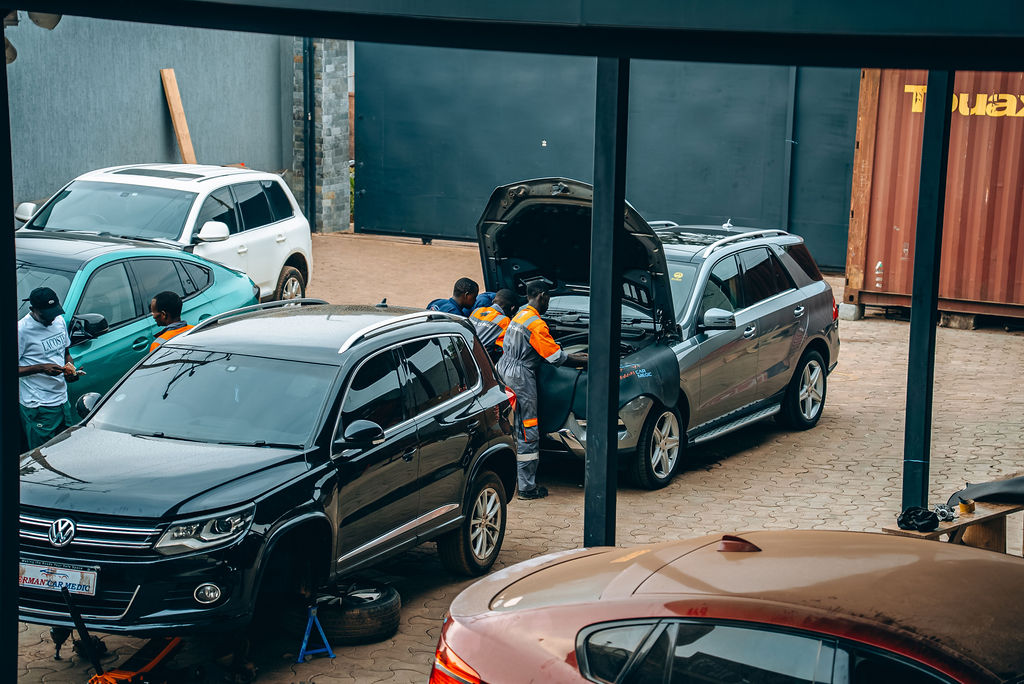
Import taxes are only part of the cost of getting a German car on the road reliably. Vehicles that have spent years in different climates and driving conditions can arrive with deferred maintenance that isn't obvious from photos or a short test drive. Before you finalize a purchase, or immediately after the car clears customs, a full pre-purchase inspection is worth the cost — catching a worn timing chain, a failing water pump, or electrical gremlins before you've put thousands of kilometers on the car is far cheaper than discovering them later.
If you're weighing an import or you've just landed one, our team can run a complete inspection and tell you exactly what condition the car is really in before you spend another shilling on it.